
A diamond plate is a textured metal sheet with raised patterns, often used for flooring, ramps, and industrial surfaces because it provides extra grip and strength. Many buyers focus on durability, but one of the most confusing aspects is understanding how aluminum checkered plate thickness is actually measured, as well as how thickness standards apply to checker plates made from other materials. In this article, we will walk you through the correct way to read thickness specs of diamond plates, avoid common mistakes, and choose the right plate for your project.
How Do You Measure Diamond Plate Thickness?
The easiest way to measure diamond plate thickness is to use a precision tool for decimal measurements, such as a micrometer or caliper, on the flat part of the sheet. You can also check the gauge number and convert it with a material-specific chart. Both methods show the true thickness of the metal and ignore the raised pattern, just as the ribs on a rebar are not part of its measured diameter.
Gauge is an older system that uses numbers instead of direct thickness values. It works in reverse: a smaller gauge number means the metal is thicker, and a larger number means it is thinner.
One important detail is that the gauge is not universal. The same gauge number gives different thicknesses for different materials. For example, aluminum 10-gauge does not match stainless steel 10-gauge. Because of these differences, many people rely on gauge charts to convert the number into a real measurement. Understanding how gauge works helps you compare diamond plates across materials and pick the strength and weight you need.
Decimal thickness shows the exact thickness in inches or millimeters, such as 0.125 inches. This system is simple: larger numbers always mean a thicker sheet, and the values stay the same across all metals.
Many beginners prefer decimal thickness because it does not require charts or conversions. When you shop for diamond plate, the decimal value gives a clear sense of the sheet’s strength and rigidity, which makes it easier to choose the right material for your project.
Complete Gauge Number Charts of Diamond Plate Thickness
Below are the gauge number charts for stainless steel, galvanized steel, carbon steel, and aluminum diamond plate thickness.
Stainless Steel Gauge Chart
| Gauge Number | Inches | Millimeters |
| 0 | 0.3125 | 7.938 |
| 2 | 0.2656 | 6.746 |
| 4 | 0.2344 | 5.954 |
| 6 | 0.2031 | 5.159 |
| 8 | 0.1719 | 4.366 |
| 10 | 0.1406 | 3.571 |
| 12 | 0.1094 | 2.779 |
| 14 | 0.0781 | 1.984 |
| 16 | 0.0625 | 1.588 |
Galvanized Steel Thickness Chart
| Gauge Number | Inches | Millimeters |
| 8 | 0.1681 | 4.27 |
| 10 | 0.1382 | 3.51 |
| 12 | 0.1084 | 2.753 |
| 14 | 0.0785 | 1.994 |
| 16 | 0.0635 | 1.613 |
| 18 | 0.0516 | 1.311 |
| 20 | 0.0396 | 1.006 |
| 22 | 0.0336 | 0.853 |
| 24 | 0.0276 | 0.701 |
Carbon Steel Gauge Thickness Chart
| Gauge Number | Inches | Millimeters |
| 8 | 0.1644 | 4.175 |
| 10 | 0.1345 | 3.416 |
| 12 | 0.1046 | 2.656 |
| 14 | 0.0747 | 1.897 |
| 16 | 0.0598 | 1.518 |
| 18 | 0.0478 | 1.214 |
| 20 | 0.0359 | 0.911 |
| 22 | 0.0299 | 0.759 |
| 24 | 0.0239 | 0.607 |
Aluminum Gauge Thickness Chart
| Gauge Number | Inches | Millimeters |
| 0 | 0.3249 | 8.252 |
| 2 | 0.2576 | 6.543 |
| 4 | 0.2043 | 5.189 |
| 6 | 0.162 | 4.115 |
| 8 | 0.1285 | 3.264 |
| 10 | 0.1019 | 2.588 |
| 12 | 0.0808 | 2.052 |
| 14 | 0.0641 | 1.628 |
| 16 | 0.0508 | 1.29 |
KEN GI primarily uses standard vernier calipers when measuring diamond plate thickness in actual practice, as it allows direct contact with the material, making the measurement result straightforward and accurate.
How to Choose the Right Thickness for Diamond Plates
Picking the right diamond plate thickness is much easier when you break it down into a few simple questions. What is the plate actually doing? Will it just look good, or does it need to carry real weight and take hits? Think about these things before deciding:
- The environment: Decorative projects can stay thin. Structural or high-wear surfaces need thicker plates.
- The amount of traffic: Light foot traffic or cosmetic use doesn’t demand much strength. But areas with equipment, carts, forklifts, or repeated impact require something sturdier.
- The support underneath: A strong subfloor lets you use thinner material because the plate doesn’t need to carry the load alone. If the plate spans a gap or sits on weak support, you’ll need more thickness to prevent flexing, dents, or bending.
Once you consider these factors together, choosing between light-duty, standard-duty, and heavy-duty thickness becomes straightforward.
Light Duty Thickness Options
0.025″ – Cosmetic Grade (Light Duty)
This is the thinnest and most flexible diamond plate, meant purely for appearance rather than strength. It bends easily and should not be used where impact or load support is required. Installers like it because it cuts cleanly with tin snips and fits well on curved surfaces. Common uses include wall panels, cabinets, garage décor, vehicle trim, and trailer or camper rock guards.
0.045″ – Light Duty
Slightly thicker than cosmetic grade, this option adds a bit more protection while staying lightweight. It still works best in low-impact or low-traffic areas where durability is not the main concern. It is often used for interior trailer walls, light-use kick plates, RV trims, toolboxes, and flooring installed over a strong, stable base such as plywood.

See more about KEN GI’s light duty diamond plate here!
Standard Duty Thickness Options
0.063″ (1/16″) – Standard Duty
This is the go-to choice for general-purpose diamond plate applications. It offers a reliable balance of strength, cost, and ease of installation, making it popular for both homeowners and professionals. When supported by a solid subfloor like 3/4″ plywood, it performs well as garage flooring, shop flooring, and utility trailer flooring because it resists moderate wear and impact.
0.100″ – General Use
A step up in strength and stiffness, this thickness is ideal when you expect heavier foot traffic or need extra resistance to bending. It provides more durability without jumping to heavy-duty levels. Typical applications include reinforced shop floors, utility spaces, and other upgraded general-use areas that require higher performance.
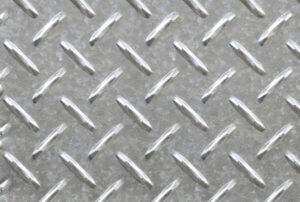
Find out more about KEN GI’s general diamond plate here!
Heavy Duty Thickness Options
0.125″ (1/8″) – Heavy Duty
This thickness is built for demanding environments where the plate must handle substantial weight, rolling loads, and repeated impact. It is strong enough for industrial platforms, ramps, truck toolboxes, warehouse surfaces, and heavy-equipment trailer floors. If durability and safety under load are priorities, 1/8 inch is a dependable solution.
0.188″ (3/16″) – Heavy Duty
At this level, the plate offers significant resistance to bending and deformation, even under heavy machinery or frequent loading. It is well-suited for equipment areas, machine rooms, and trailer floors designed to carry large or concentrated loads. Choose this thickness when you need long-term strength and stability.
0.250″ (1/4″) – Heavy Duty / Structural
This is one of the strongest commonly used diamond plate thicknesses. It provides substantial structural support and stands up to extreme wear conditions. Because of its rigidity, it is often used for industrial ramps, structural flooring, and other high-wear surfaces where reliability and load-bearing capacity are essential.
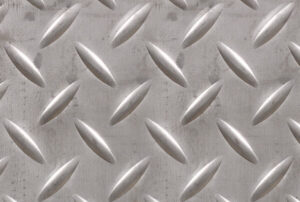
See more about KEN GI’s heavy-duty diamond plate here!
Diamond Plate Thickness Summary Table
| Thickness (Inches) | Duty Level / Description | Typical Uses |
| 0.025″ | Cosmetic Grade (Very Thin) | Wall panels, cabinets, garage décor, vehicle trim, camper, and trailer rock guards. |
| 0.045″ | Light Duty | Interior trailer walls, low-traffic kick plates, toolboxes, RV trims, and flooring over solid plywood. |
| 0.063″ (1/16″) | Standard Duty (Most Popular) | Garage flooring, shop flooring, utility trailer floors with strong subfloor support. |
| 0.100″ | General Use (Stronger Standard) | Areas needing added stiffness, such as upgraded shop floors and utility surfaces. |
| 0.125″ (1/8″) | Heavy Duty | Industrial platforms, ramps, truck toolboxes, warehouse floors, heavy-equipment trailers. |
| 0.188″ (3/16″) | Heavy Duty | Machine areas, equipment platforms, and heavy trailer floors. |
| 0.250″ (1/4″) | Heavy Duty / Structural | Structural flooring, industrial ramps, high-wear environments. |
It is important to note that the final thickness of the plate may vary after embossing (stamping) with tread patterns. Differences in pattern design and forming depth lead to variations in the height of the raised surface. As a result, the actual measured thickness may slightly differ from the original base thickness.
KEN GI Provides You with the Best Quality Sheets of Diamond Plate for Your Needs
Choosing the right diamond plate thickness for different materials, like steel and aluminum, becomes much easier when you have a reliable partner who understands both the material properties and your application needs. As a seasoned diamond plate manufacturer with over 40 years of industry experience, KEN GI delivers consistent quality backed by advanced production, strict inspections, and dependable supply. We help you select the right thickness, finish, and design, whether you need lightweight aluminum sheets, everyday use diamond plate sheet, heavy-duty structural plates, or custom expanded metal products (metal mesh, rib lath, etc) for larger projects.
From material consultation and custom fabrication to on-time delivery and long-term support, our team is here to make your buying process simple and worry-free. If you have questions or need a custom solution, reach out to KEN GI today and let us provide the right diamond plate for your next project.